There are places that impress through their size. And there are places that impress through their people.
Schletz, a small district of the market town of Asparn an der Zaya in the Lower Austrian Weinviertel, belongs to those places you might easily miss on a map — and never quite forget after a visit. Between vineyards, fields and gentle hills, daily life is shaped by neighbourhood, cohesion and voluntary commitment. People know each other here, they support each other, and stories are made that reach far beyond the village.
At the heart of this community stands, since 1979, the USC Schletz.
What may look like a regional football club from the outside means considerably more to the people of the village. The club is a meeting place, a youth academy, an event organiser, a circle of friends and, for many families, a fixed part of life across generations. Children score their first goals here, teenagers grow up together, and former players return to the pitch again and again years later. USC Schletz connects generations — not only through football, but through community.
The pitch, therefore, is far more than a playing field. It is a place of encounter.
When Rapid comes to the Weinviertel
On this summer day, that very pitch became the stage for something extraordinary. The Rapid legends came to Schletz.
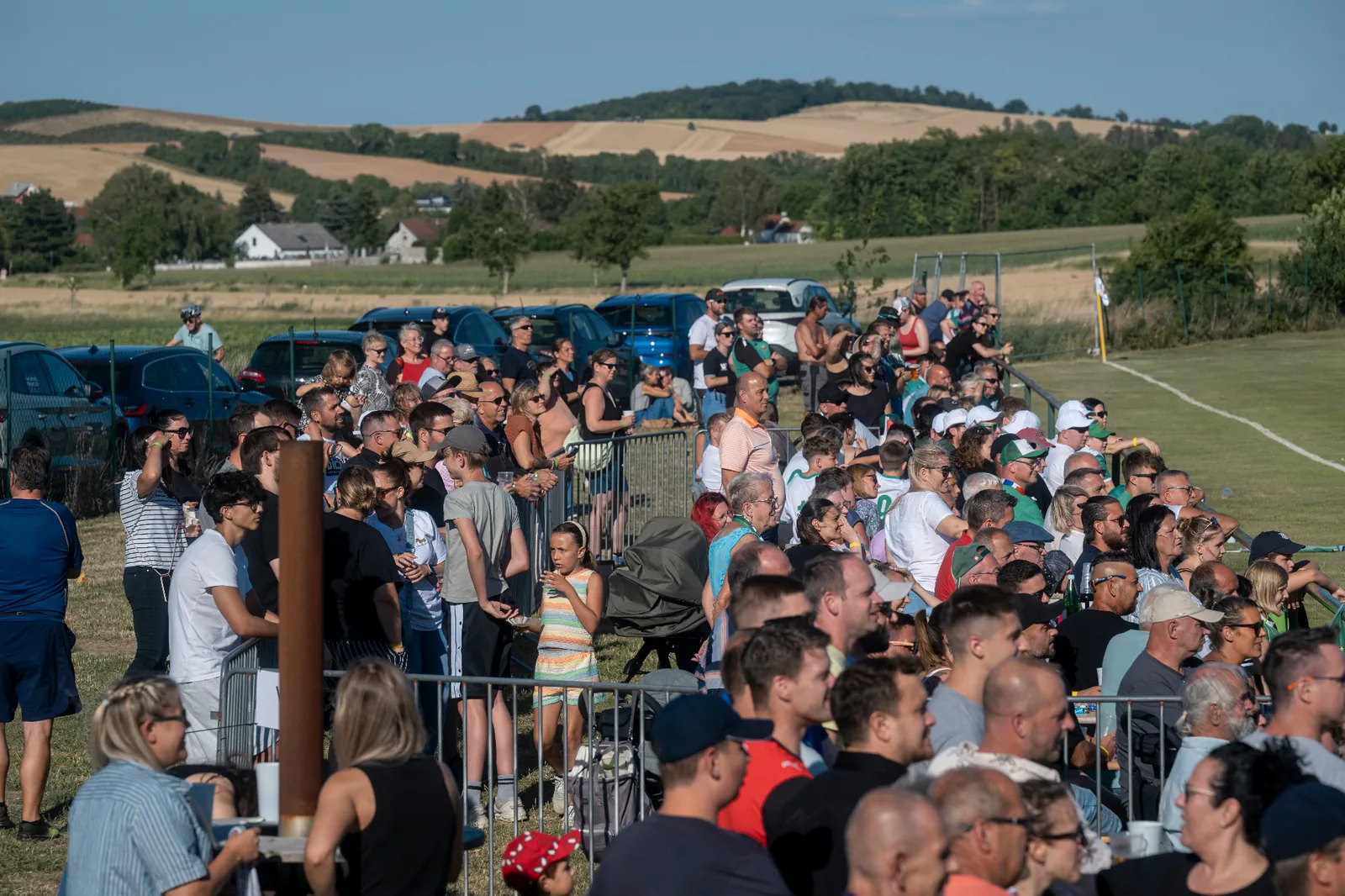
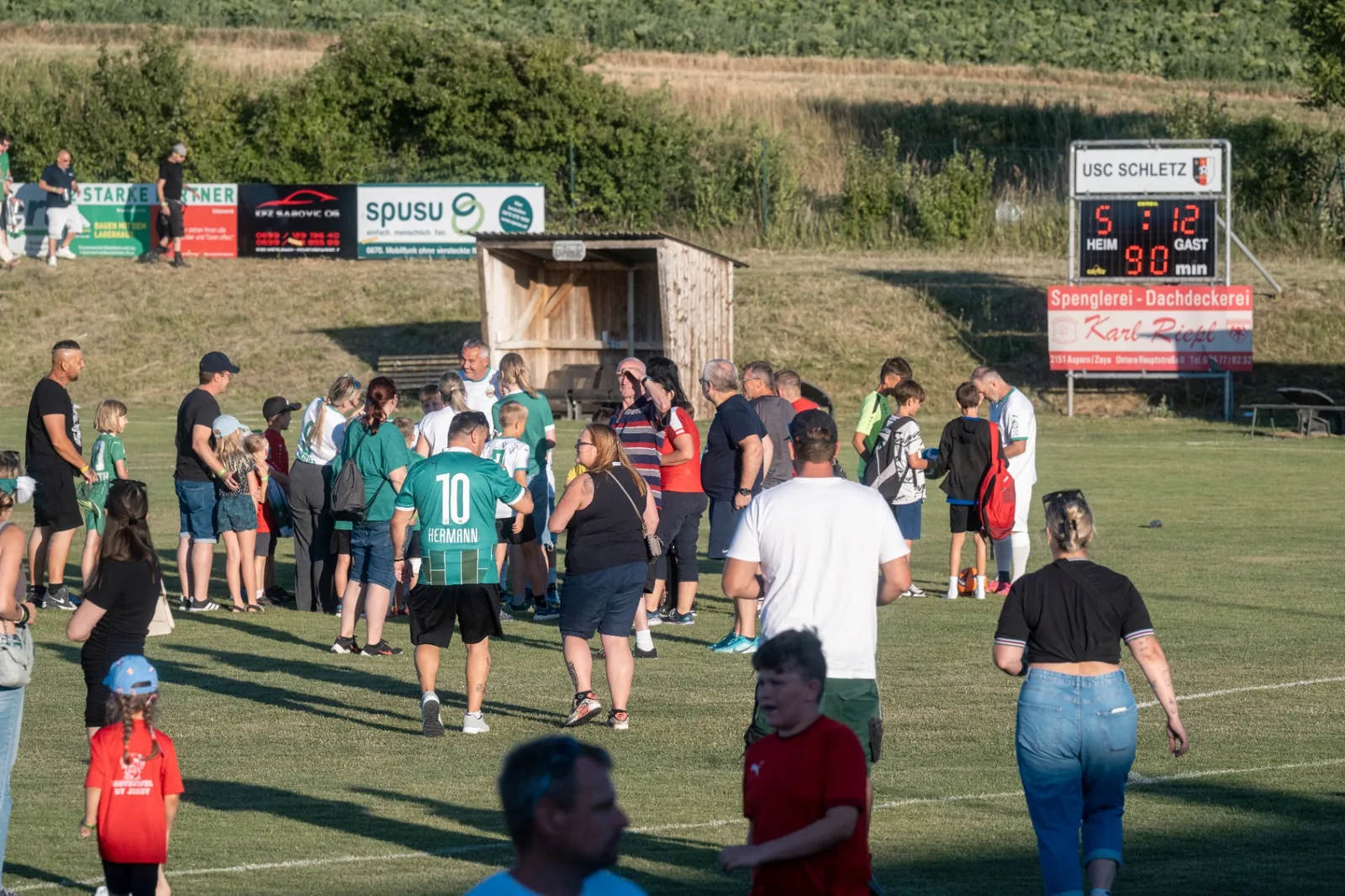
Long before kick-off, a very particular atmosphere already surrounded the ground. Families arrived together at the field, former players greeted old companions, children waited with jerseys and footballs for autographs, and visitors from across the region seized the chance to experience some of the most familiar figures of Austrian football up close.
It was one of those days when you can feel how football connects people. Not only on the pitch. But far beyond it.
SK Rapid Wien — more than a football club
Anyone speaking about football in Austria cannot go past SK Rapid Wien. The club is one of Europe's most storied football clubs and Austria's record champion. Generations of football fans associate Rapid with legendary league titles, unforgettable European Cup nights, and personalities who have shaped Austrian football for decades.
It becomes all the more extraordinary when this history is written not inside a large stadium, but on a small pitch in the middle of the Weinviertel.
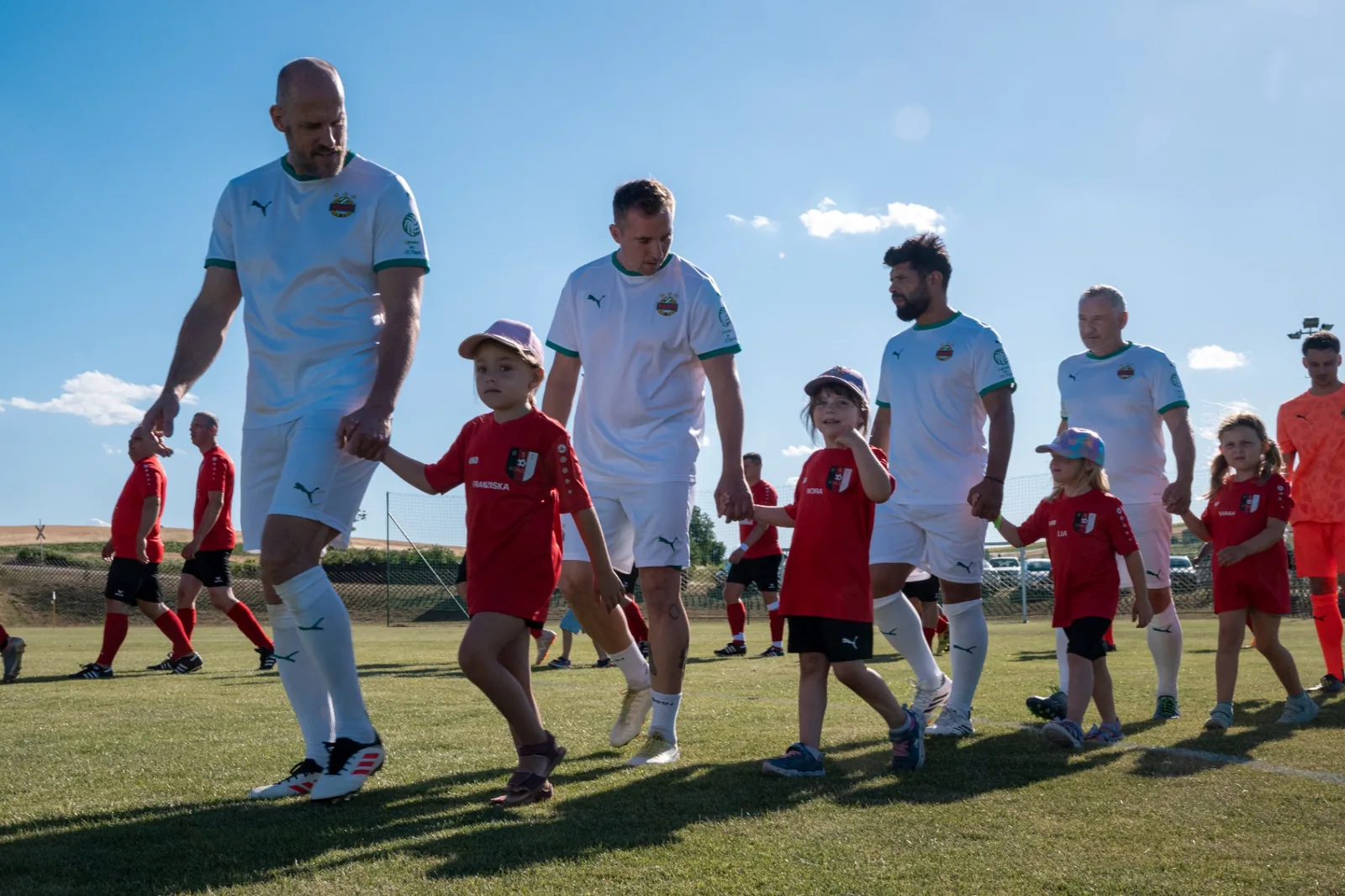
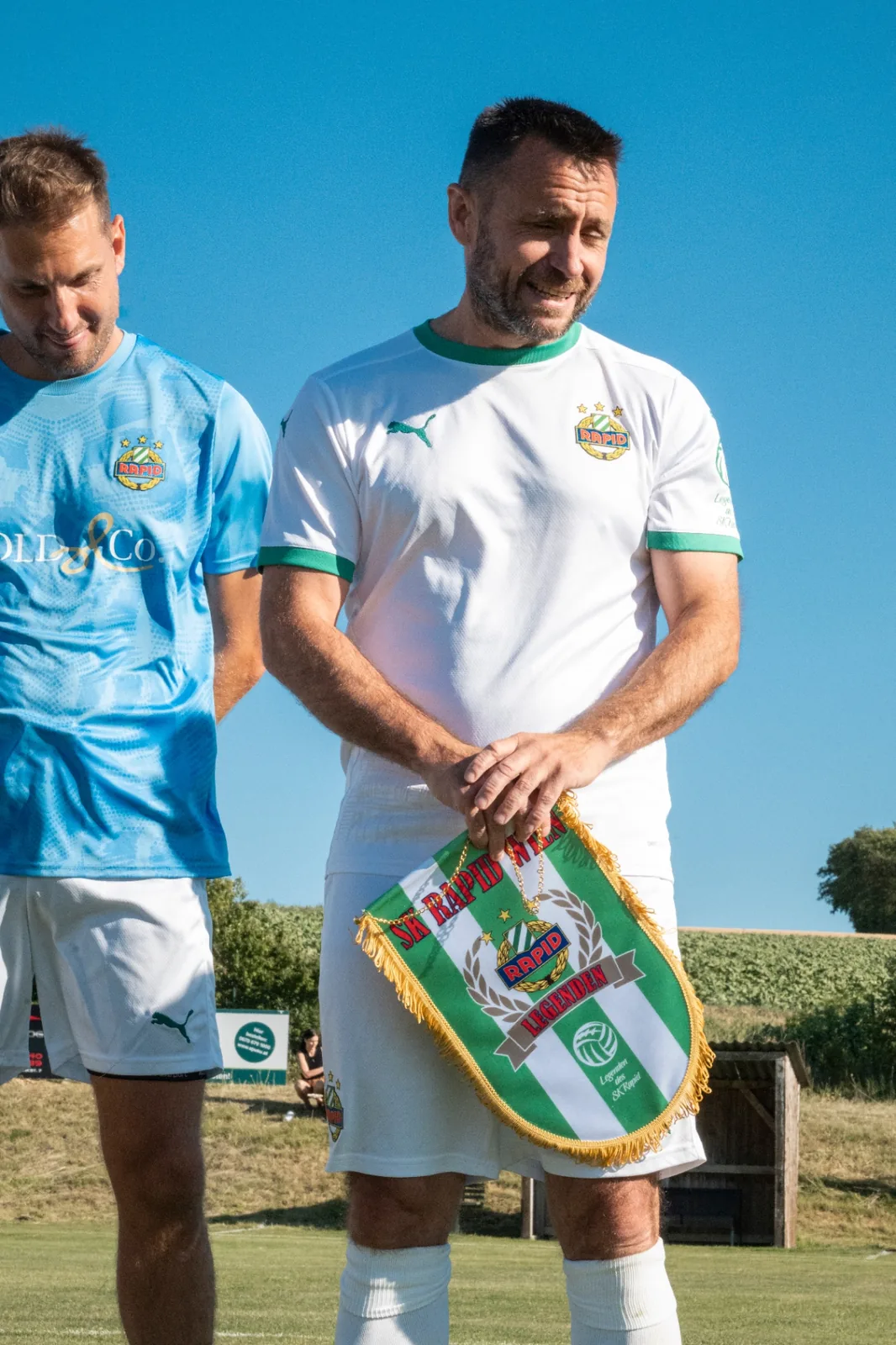
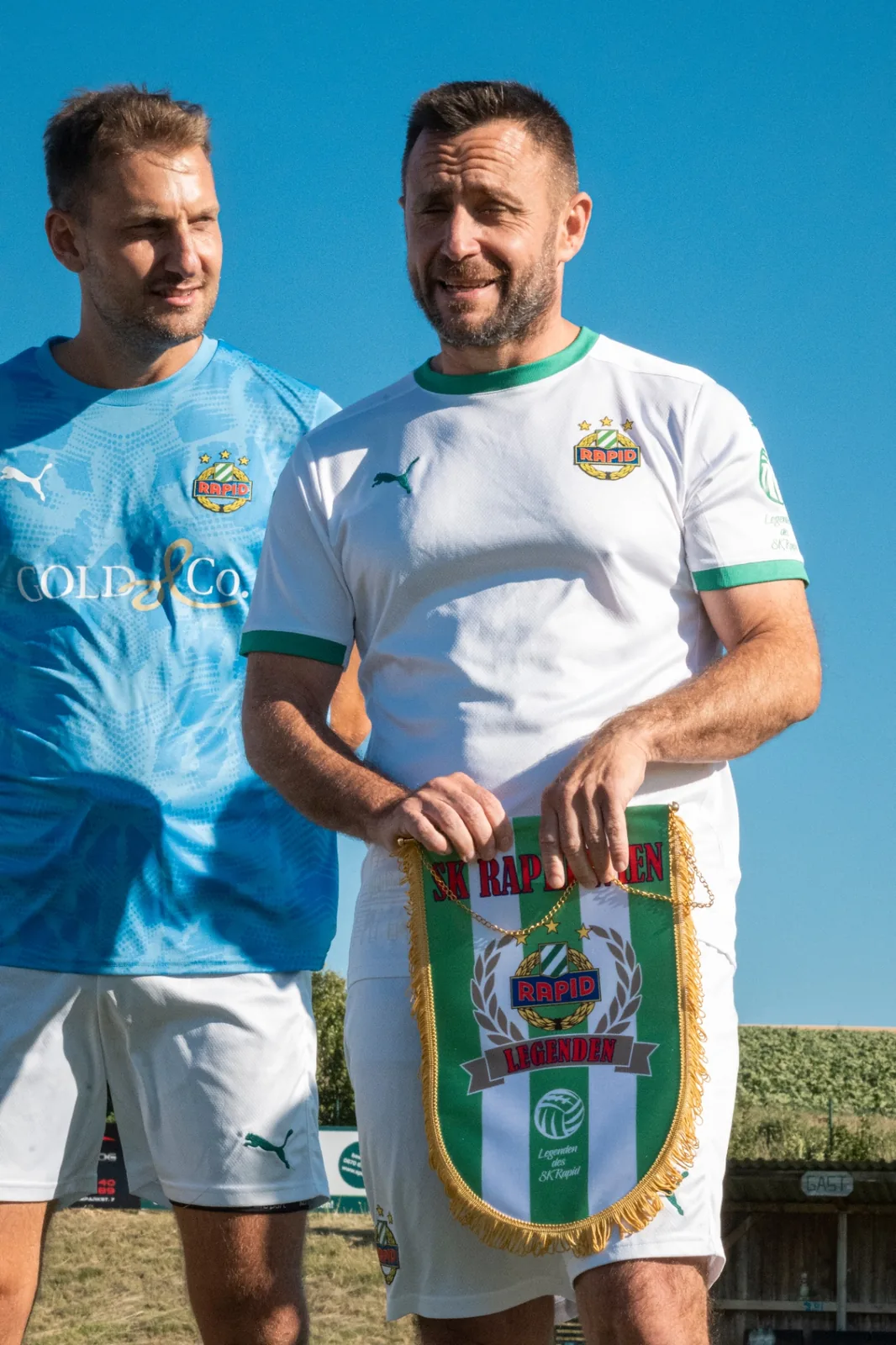
With the Rapid legends on the pitch stood former players who have won championships, contested European Cup matches and represented the Austrian national team. Among them were Steffen Hofmann, Peter Pacult, Ümit Korkmaz and Christopher Dibon — standing in for many former Rapid players who made this afternoon a special experience for the visitors.
For many children it was their first personal encounter with their idols. For many adults, a journey back into their own football history.
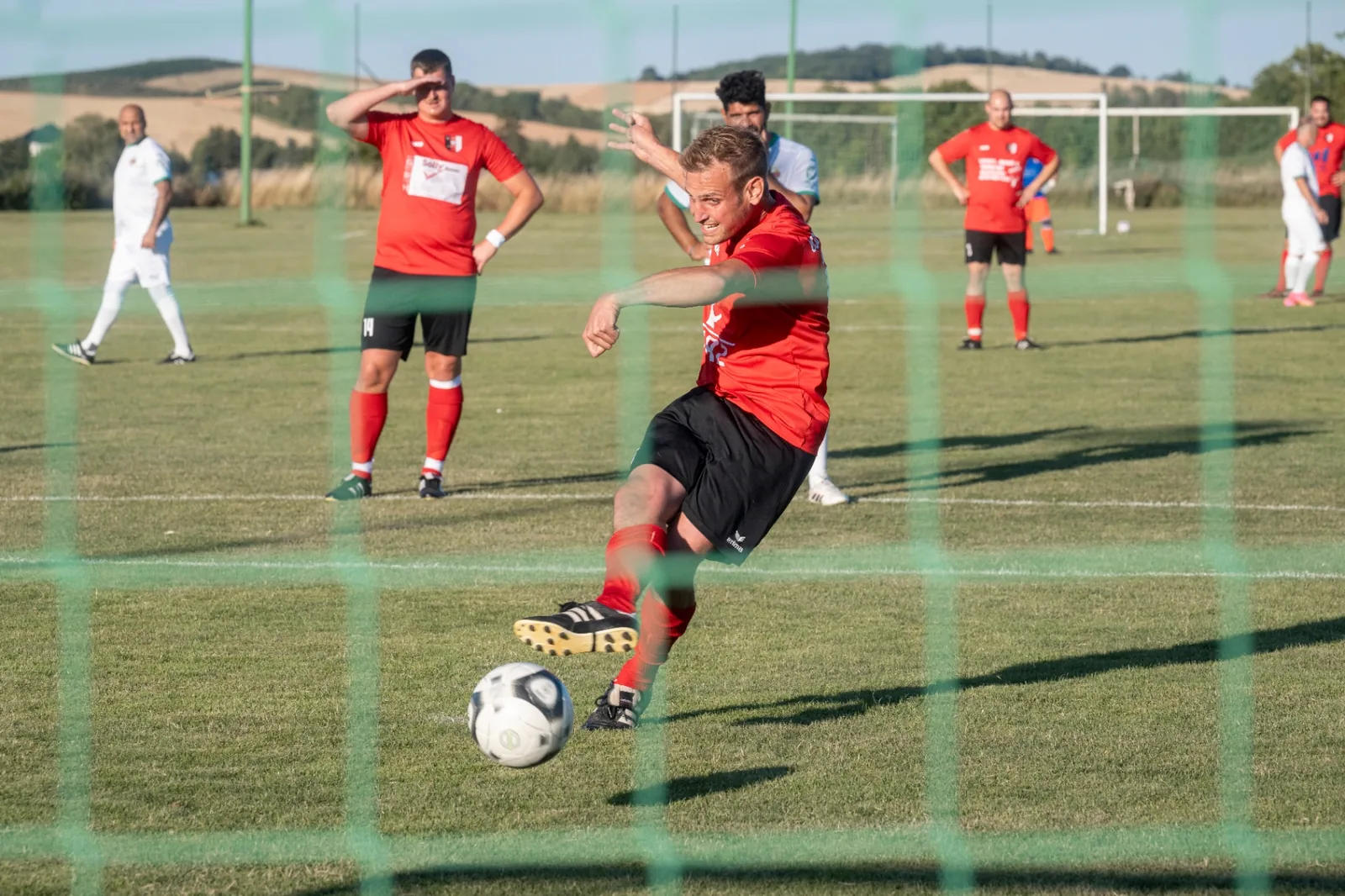
A friendly match in which the score did not matter
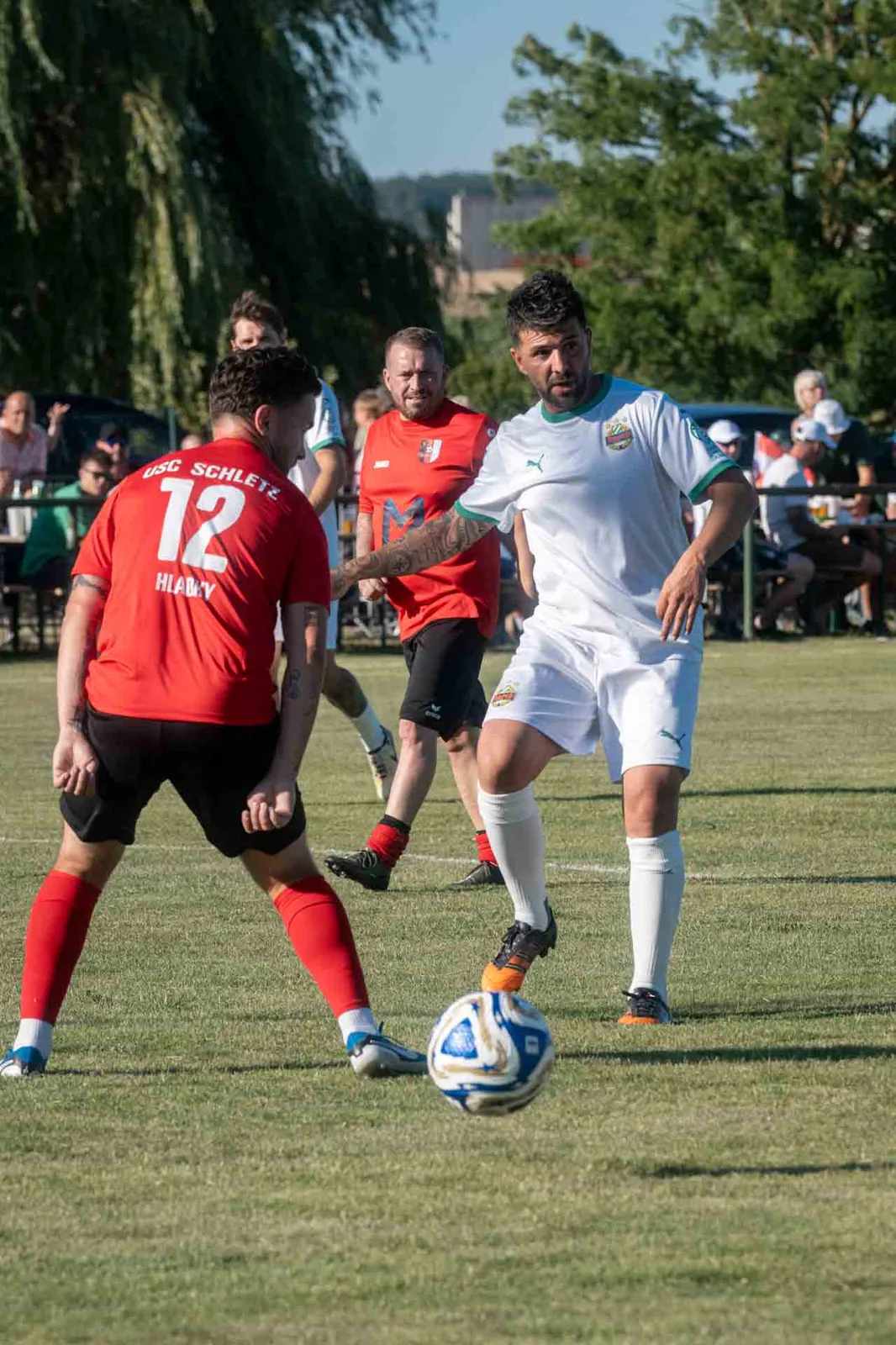
Football was played, of course. And of course the Rapid legends impressively showed their class and eventually decided the match in their favour by a clear, double-digit result.
Yet only minutes after the final whistle, the scoreline was hardly a topic anymore. Because no one had come to Schletz to count league points.
It was not about statistics. Not about records. Not about championships. It was about encounters.
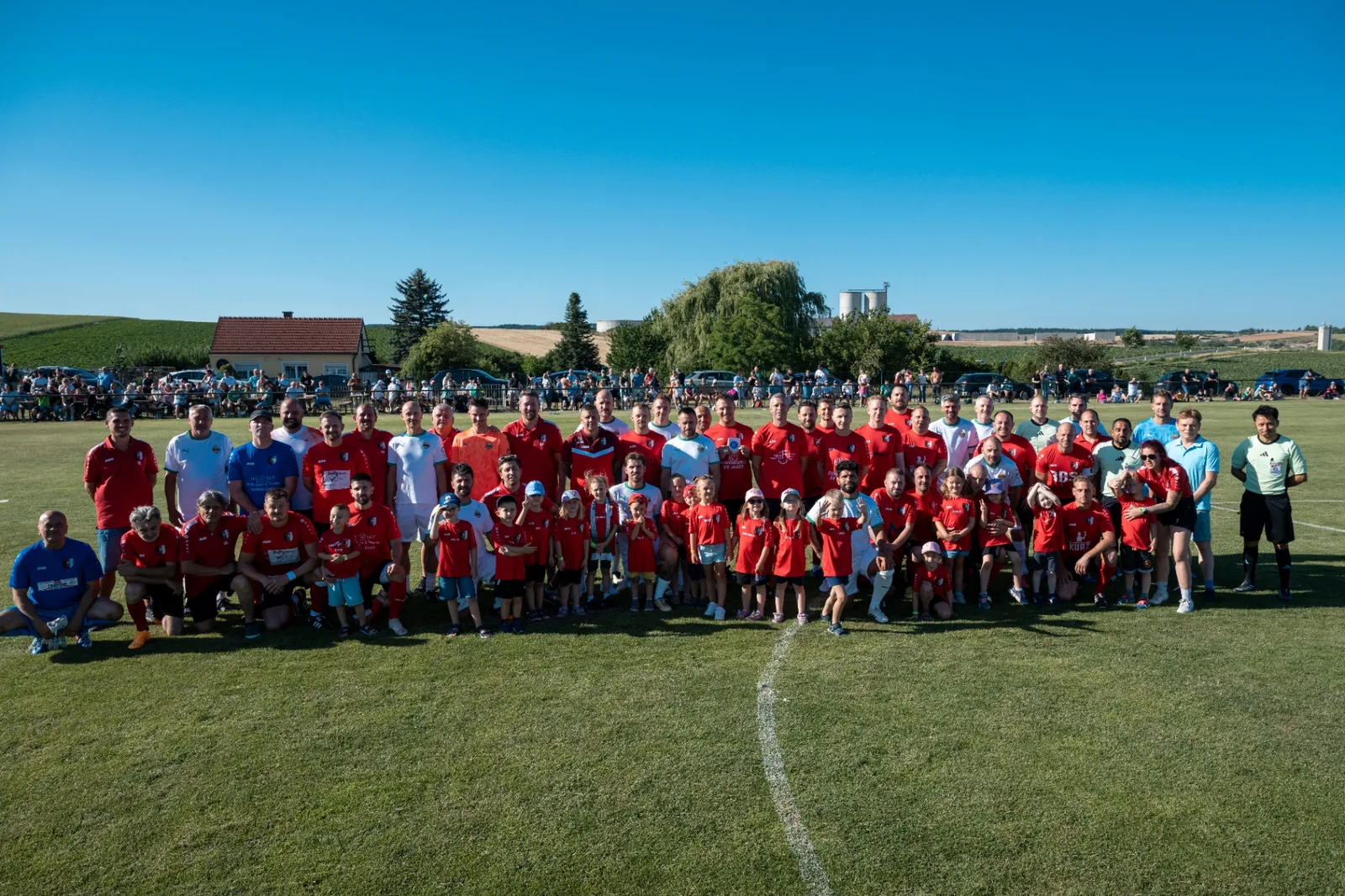
Children ran onto the pitch together with the teams. Parents watched the game together with their families. Old friends met again. Players signed autographs, took the time to talk and posed patiently for memories in front of the lens.
It was precisely these moments that made the afternoon special.
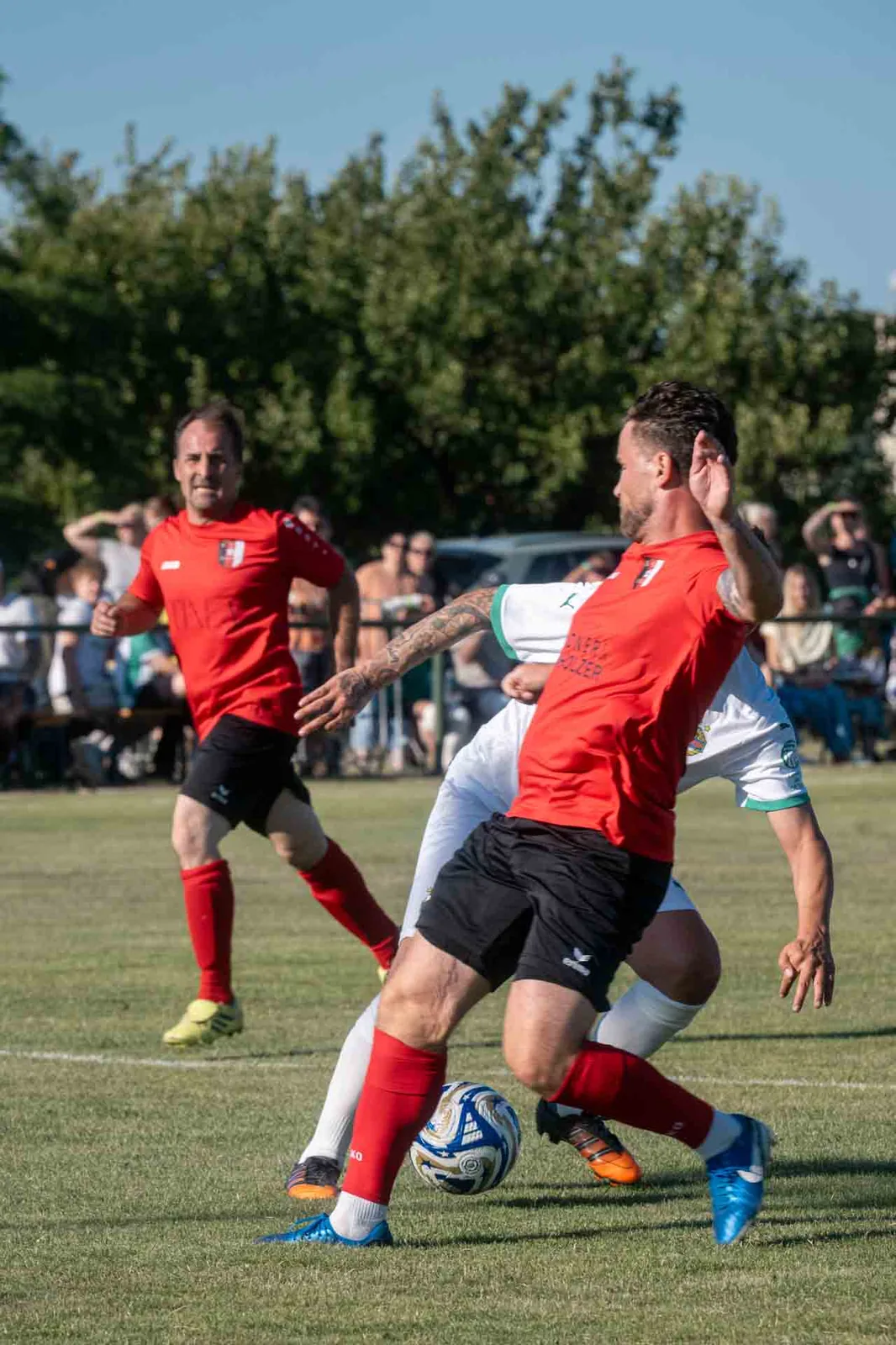
The voice of SK Rapid Wien
A very particular role was played by Andy Marek, who, over many years as the legendary stadium announcer of SK Rapid Wien, has become inseparable from the club. With his unmistakable voice, he brought a piece of Rapid history into the Weinviertel. At the same time, he managed to preserve the familial character of the event. His moderation combined professionalism with warmth and created exactly the atmosphere that defined this day. Not loud. Not overdone. But authentic.
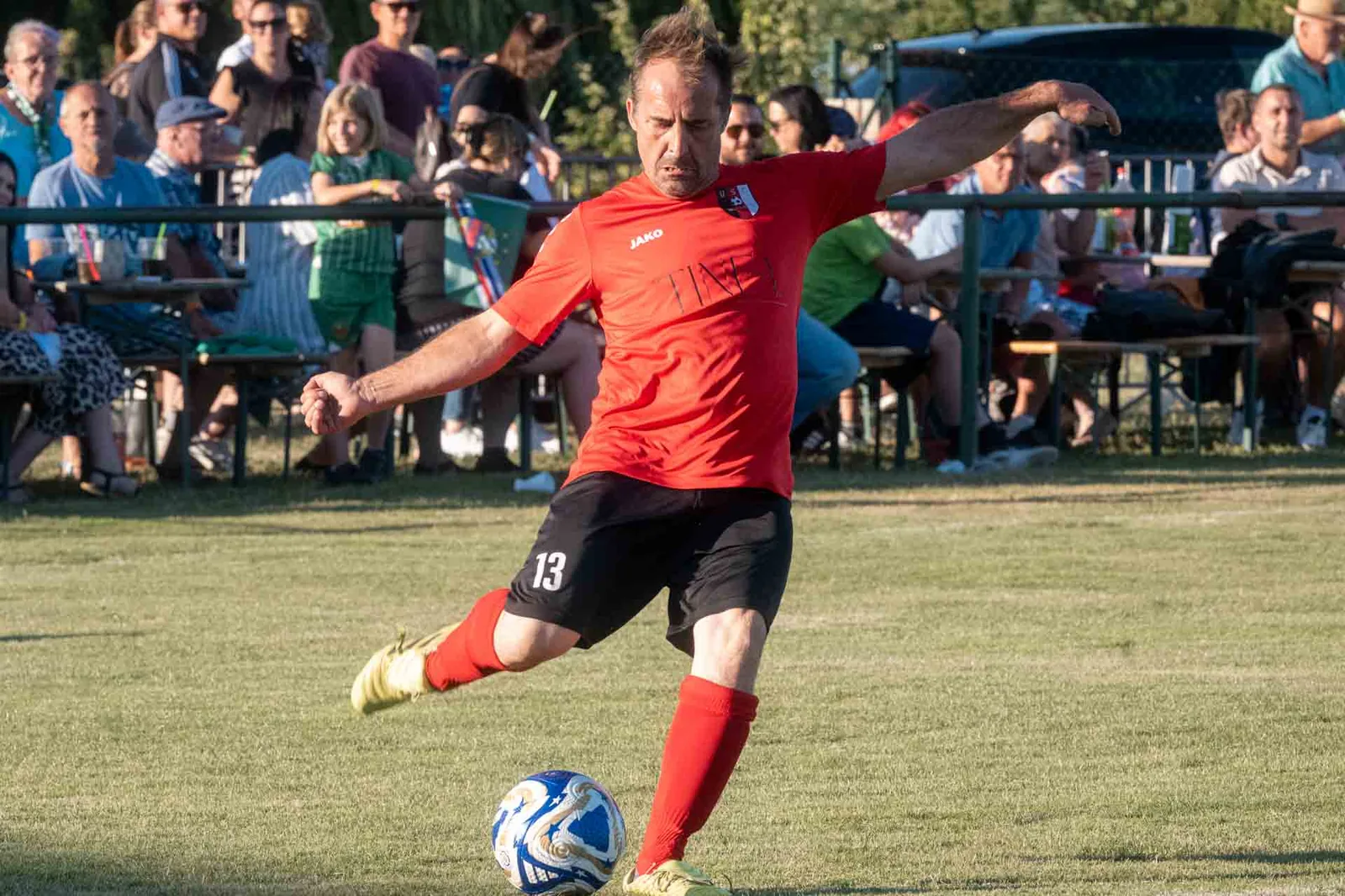
Why clubs like USC Schletz are indispensable
Big clubs win titles. Small clubs make sure football can be lived at all.
All across Austria, thousands of volunteer officials invest countless hours of their free time. They organise youth work, maintain sports grounds, plan events, win sponsors and create places where people come together.
For more than four decades, USC Schletz has stood for exactly these values. The club connects generations and creates identity — not only for Schletz, but for the entire region around Asparn an der Zaya.
Precisely in a time when so much has become digital, such places are gaining relevance again. They create real encounters. They bring people into conversation. And they remind us that community always begins with people.
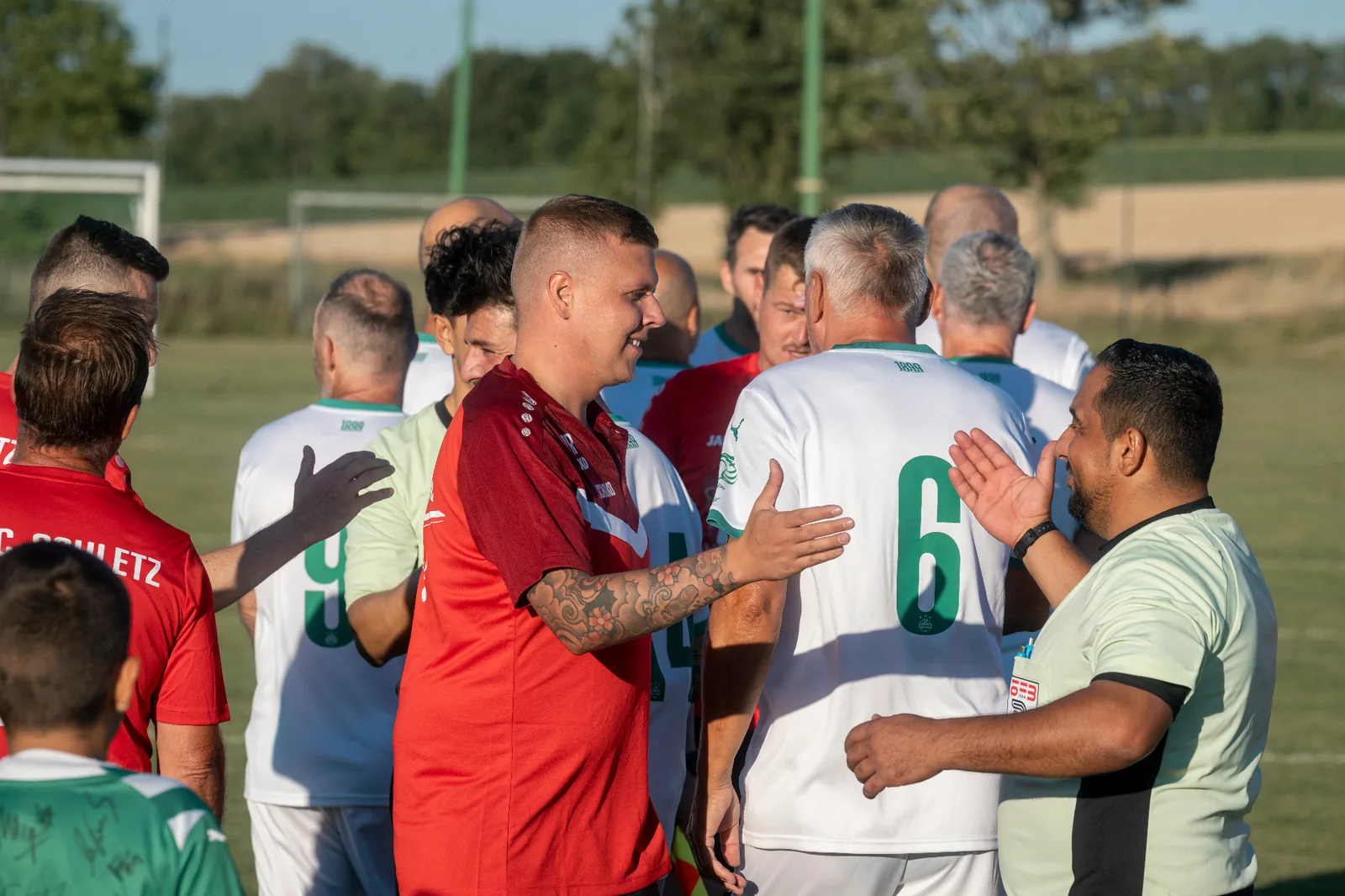
Photography between sport and humanity
As a photographer, on days like these I am of course interested in spectacular duels, well-executed combinations and emotional scenes on the pitch. Yet the small moments in between are even more compelling.
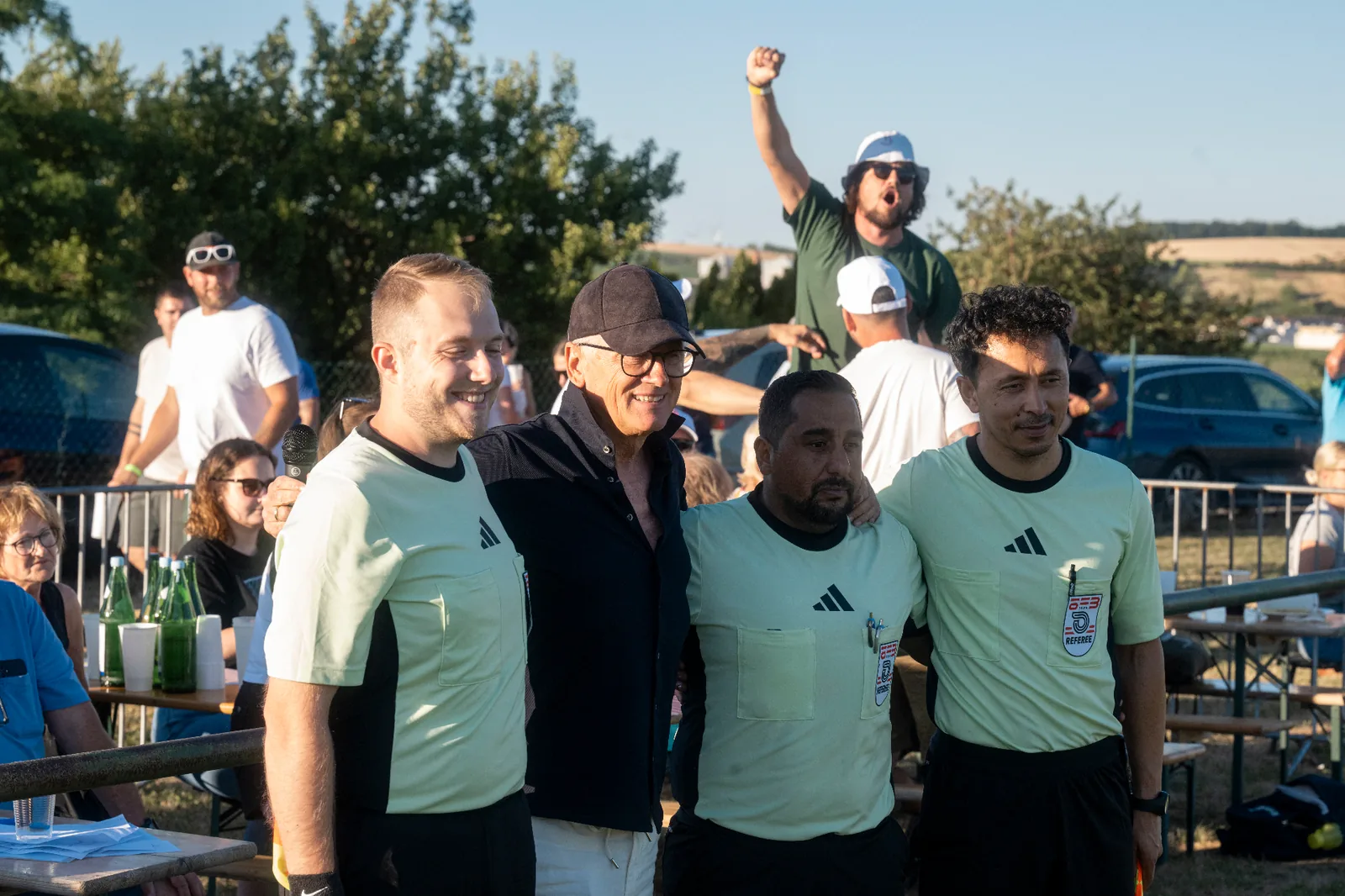
The proud gaze of a child walking onto the field. A brief handshake after the final whistle. The smile of a former professional during a conversation. Spectators who simply enjoy the moment.
These images tell the real story of the day. Not because they are spectacular. But because they are honest.
More than a football match
As the sun slowly disappeared behind the fields of the Weinviertel and the pitch emptied again, more remained than a friendly match won.
What remained was the feeling of having been part of a special day. A day on which a small place showed how big community can be. A day on which generations laughed together, shared memories, and experienced football together.
Perhaps this is exactly the greatest strength of amateur football. It connects people. It creates encounters. And sometimes the most beautiful stories are not made in the largest stadiums of Europe. But on a football pitch in Schletz, in the middle of the Weinviertel.
Behind the Lens
For me, photography does not mean capturing results. It means making people, places and stories visible. The visit of the Rapid legends to USC Schletz was far more than a football match. It was a striking example of the power that community, voluntary commitment and regional clubs still hold today. It is exactly these stories that SCHOPHO wants to tell.
Behind the Lens
Some stories are not remembered because of the final score. They are remembered because of the people who were there.