Photographed with
Nikon Z9 · NIKKOR Z 50 mm f/1.8 S · Godox AD300 Pro · Adobe Camera Raw
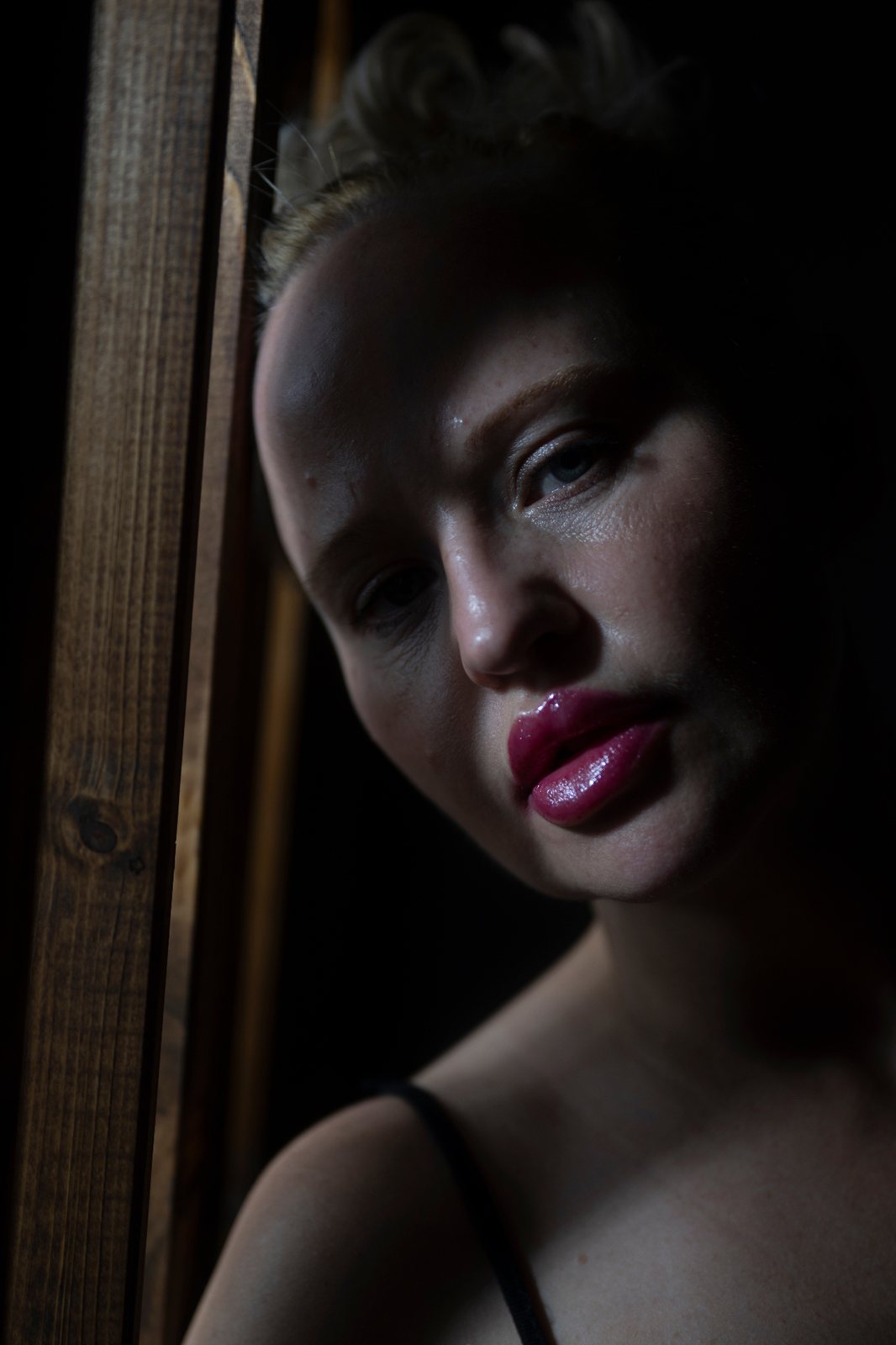
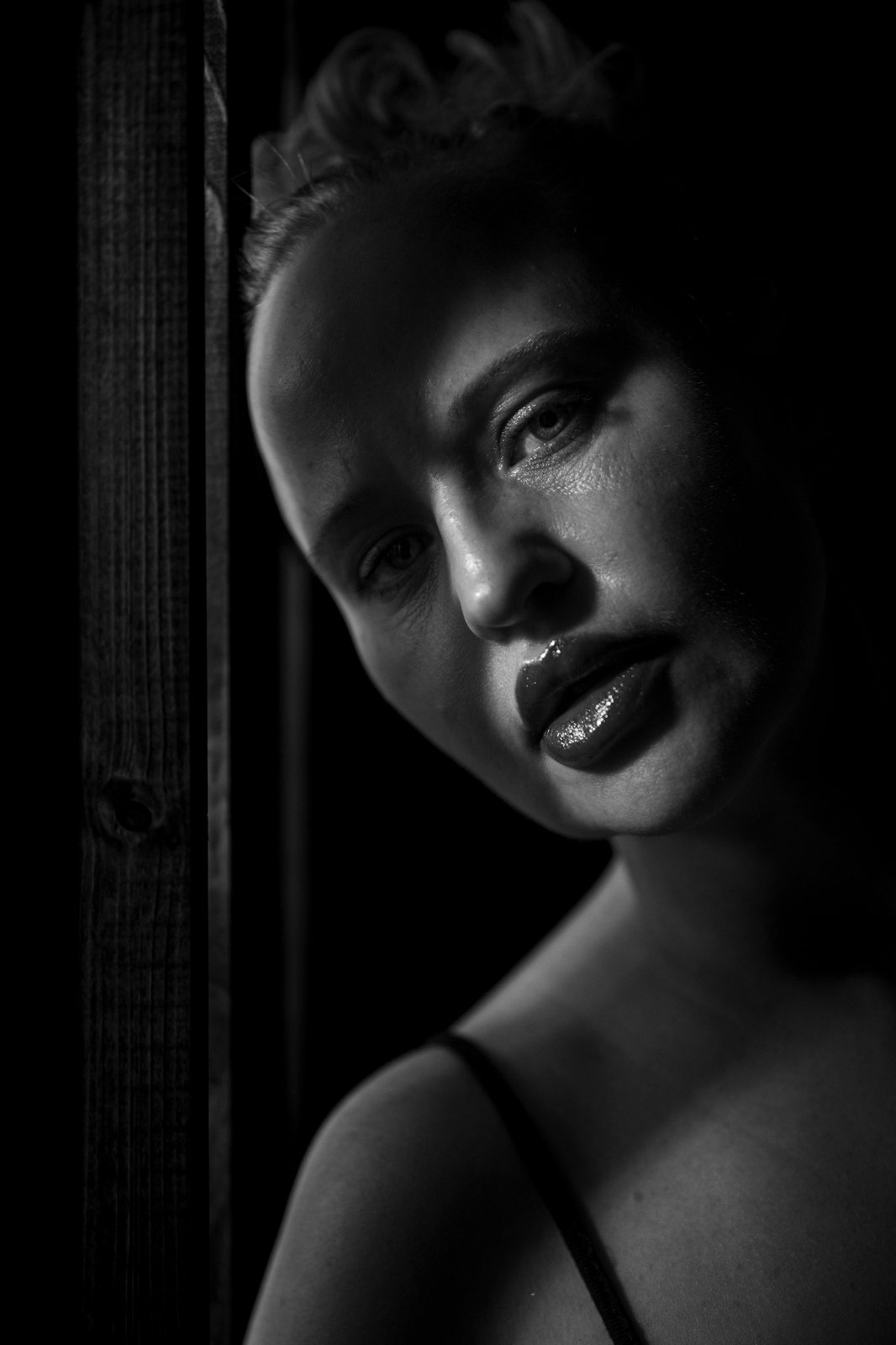
When I first showed this image, I was asked the same question again and again.
"Why is it so dark?"
Interestingly, almost no one asked about the camera or the lens. No one wanted to know which flash I had used, or which settings I had chosen.
The first reaction was almost always the same:
"Why does the image look like this?"
That is exactly the question I love.
Because it means the viewer is not talking about technique. They are talking about impact.
And for me, that is where good photography begins.
Light is not there to make everything visible
For many years, we were told that a good portrait must be lit as perfectly as possible.
Every part of the face should be visible. Every shadow lifted. Every skin texture as flawless as possible.
I see it differently today.
For me, light is not there to show everything. Light decides what the viewer sees first — and what they discover only later.
It is precisely this decision that turns a technically good image into a portrait with character.
A surprisingly simple technique
This image was not made in a large studio. Not with multiple flashes. Not with an elaborate lighting setup.
The entire equipment consisted of a Nikon Z9, the NIKKOR Z 50 mm f/1.8 S, a Godox AD300 Pro and a large softbox. Nothing more was needed.
The actual idea came about by chance. In the room stood a wall of vertical wooden panels.
Instead of pointing the flash directly at the model, I deliberately placed the large softbox behind these panels — very close to the face.
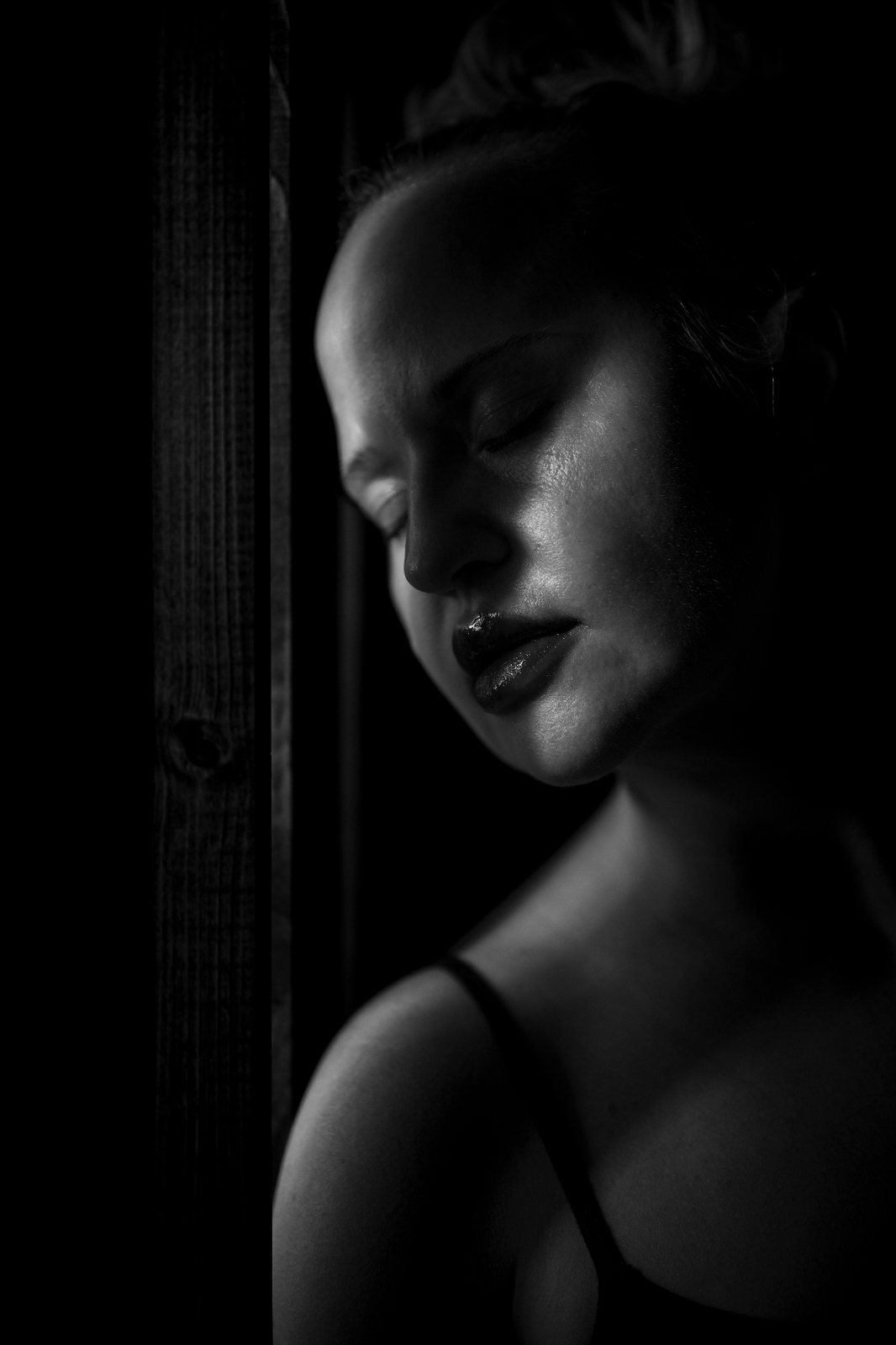
As a result, the soft light of the softbox did not fall evenly on the model. The wooden panels split it into narrow bands of light. That is how the distinct strips of light on the forehead, eye, nose and cheek were created.
It was not the flash that created this look. The wooden structure shaped the light.
For me, that was the most exciting moment of the entire shoot.
Why a large softbox?
Many photographers would probably choose a small light source for a look like this. I deliberately went the opposite way.
A large softbox initially produces very soft light. Only the wooden panels give this light structure. This creates clean graphic lines while the transitions on the skin remain soft and natural.
It is precisely this combination that makes the image quiet. Almost painterly.
Why the NIKKOR Z 50 mm f/1.8 S?
For Fine Art portraits, focal lengths between 85 and 135 millimetres are often recommended. For this shoot, however, that would not have been the right decision.
The images were made in a small apartment. With a longer lens, I would have needed considerably more distance from the model.
The NIKKOR Z 50 mm f/1.8 S offered exactly the angle of view I was looking for. Natural. Direct. Unobtrusive.
Add to that an exceptional sharpness even at open aperture. For me, it belongs to those lenses that should be used far more often than they usually are in practice.
The most important step did not happen while shooting
The finished image was first created in colour. Actually, I already liked the shot directly on the camera display.
When I looked at it later on the large monitor, however, I noticed something. The colours suddenly told their own story.
The warm wooden tones. The skin. The lips. My eye kept wandering back and forth between these colours.
But that was never supposed to be the point. I wanted the eye to follow the light. Not the colours.
So I developed a first black and white version. Within a few seconds it was clear: this was exactly how I had imagined the image.
Suddenly all distractions disappeared. What remained was only light. Shadow. Form. Expression.
For me, black and white therefore does not mean giving up colour. Black and white is a conscious decision. It reduces an image to what really matters. And precisely through this, a timelessness often emerges that colour cannot always achieve.
Adobe Camera Raw was the last step – not the first
Of course, the image was then developed in Adobe Camera Raw. Highlights were reduced. The blacks deepened. Face and eyes selectively masked. Hardly more was necessary.
Because the actual editing had already begun long before. In the moment when the position of the softbox was set. When I decided not to let the light fall directly onto the face. And when it became clear that the wooden panels would be an essential part of the image.
For me, image editing therefore does not begin at the computer. It begins with light.
My conclusion
When I am asked today how this image came about, my answer is not: through a Nikon Z9. Not through a Godox AD300 Pro. And not through Adobe Camera Raw either.
This image was created through decisions. The decision to work with only one light source. The decision to consciously shape the light. And the decision to leave out colours where they distract from the actual idea of the image.
Perhaps that is exactly the most important task of a photographer. Not to show as much as possible. But to know exactly what has to be visible.
Continue exploring
Executive Stories
Beyond Stories
Journal
Contact
If this look behind the scenes inspired you, here you will find further image series, photographic projects and information about my work.
Perhaps the most important task of a photographer is not to show as much as possible, but to know exactly what has to be visible.